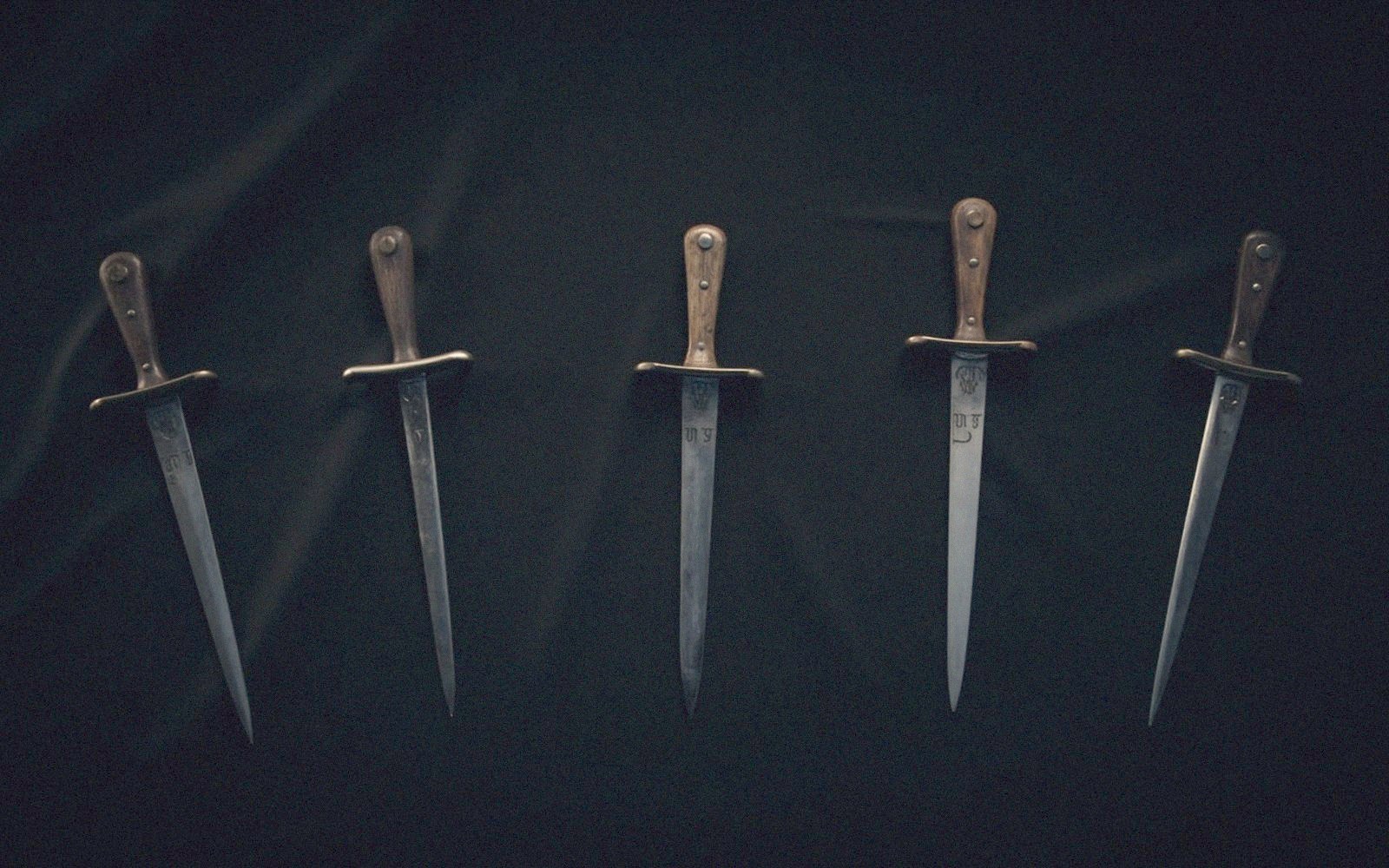
The Musketeer picture as a genre unto itself
The Three Musketeers is one of the most filmed novels in history. Dumas's 1844 adventure has drawn directors back repeatedly across more than a century — in silence, in Technicolor, in satire, in animation — which means that by the time Peter Hyams brought his version to screens in 2001, any new entry arrived carrying a full library of predecessors. That is a peculiar pressure. The film did not simply have to work on its own terms; it had to occupy some distinct position in a field already shaped by two or three genuinely definitive interpretations. Whether it managed that is a fair question. What it did differently, though, is less ambiguous.
The silent era produced several Musketeers, but the production that first fixed the story as spectacle was the 1921 Douglas Fairbanks version. Fairbanks, then at the peak of his athletic stardom, played D'Artagnan as a leaping, swashbuckling near-acrobat — someone for whom swordplay was as much physical comedy as combat. The film is essentially a vehicle for his body and his energy, and it worked because those two things were extraordinary. It set a template the sound era would struggle to escape: the Musketeer picture as showcase for one performer's physicality.
The 1948 MGM version with Gene Kelly pushed that logic further and into self-parody, turning D'Artagnan into an opportunity for dance-inflected athleticism, all bounce and flourish. It is charming in its way, but no one has ever called it a convincing historical adventure. What it wanted to be was entertainment in the most uncomplicated sense, and that it delivered. The swashbuckler tradition of the studio era treated the source material as a wardrobe, not a text.
Richard Lester's two-film version — The Three Musketeers and The Four Musketeers, shot together in 1973 and released in 1973 and 1974 — remains the most critically admired adaptation, and its position in the conversation is secure enough that every subsequent version is implicitly measured against it. Lester's films are knowing, physically inventive, and genuinely witty: they treat the swordplay as messy and exhausting rather than elegant, and they allow the comedy to coexist with real danger. Oliver Reed, Richard Chamberlain, Frank Finlay and Michael York gave the company weight, and Faye Dunaway played Milady as a genuine predator. It is a high-water mark, and it was always going to cast a shadow.
The 1993 Disney version with Charlie Sheen, Kiefer Sutherland and Chris O'Donnell reached for the same broad entertainment as the 1948 film and found a younger audience. It was not a Lester heir; it was not trying to be. It moved fast, kept the tone light, and deployed Bryan Adams on the soundtrack. It knew its audience and served them, which is an honest thing to be.
| Film | Director | What the swordplay is |
|---|---|---|
| The Three Musketeers (1948) | George Sidney | Technicolor swashbuckler, athletic fencing |
| The Three Musketeers (1973) | Richard Lester | Comic, muddy, famously well-choreographed |
| The Three Musketeers (1993) | Stephen Herek | Studio adventure, star-led |
| The Musketeer (2001) | Peter Hyams | Wire-work action grammar over a costume frame |
| The Three Musketeers (2011) | Paul W. S. Anderson | Steampunk spectacle |
What the Hyams film chose to do
The 2001 film entered this field and made a specific, legible choice: it would take the action more seriously than any previous version had. Not the drama, necessarily, not the politics, not even the characters in their full Dumas complexity — but the physical action, the fights, the choreography, the grammar of bodies in combat. Peter Hyams brought in the Hong Kong action choreographer Xin Xin Xiong, who had worked with Jet Li, and built sequences that no Musketeer film had previously attempted. The results — particularly the ladder fight, which has genuinely entered the conversation about great screen combat — are unlike anything in the Fairbanks or Lester or Disney versions.
This was a deliberate departure from the swashbuckling tradition. Classic swashbucklers depend on the single gifted performer: Fairbanks leaping, Kelly spinning, York parrying with clean theatrical grace. The Hyams film imports wire-enhanced ensemble choreography from Hong Kong action cinema and applies it to seventeenth-century swordplay. The results are visually unlike anything the European historical adventure had previously shown. There is a quality of suspended physics — of bodies momentarily freed from ordinary weight — that gives the fight sequences a distinct texture, one borrowed from wuxia and applied, incongruously but effectively, to French court intrigue.
Justin Chambers as D'Artagnan is athletic and committed throughout, and the production asked a great deal of him physically. He is not Fairbanks — nothing about the film invites that comparison — but he sustains the sequences, and the choreography around him is consistently more ambitious than anything the character had been given on screen before. The film gave D'Artagnan better fights than any previous adaptation. It did not necessarily give him a more interesting inner life.
Tim Roth as Febre and Stephen Rea as Cardinal Richelieu are both doing something the earlier films rarely attempted: presenting antagonism with a measure of genuine menace rather than theatrical villain-ness. They are underused in the editing, but when they are present they stabilise the tone. Catherine Deneuve as Anne of Austria and Mena Suvari as Francesca fill roles that most adaptations have simplified; this film simplifies them no less, but it does so with better actors than the field usually provides. The cast is stronger than the film's reputation suggests.
Every Musketeer film is really an argument about how a sword fight should look.
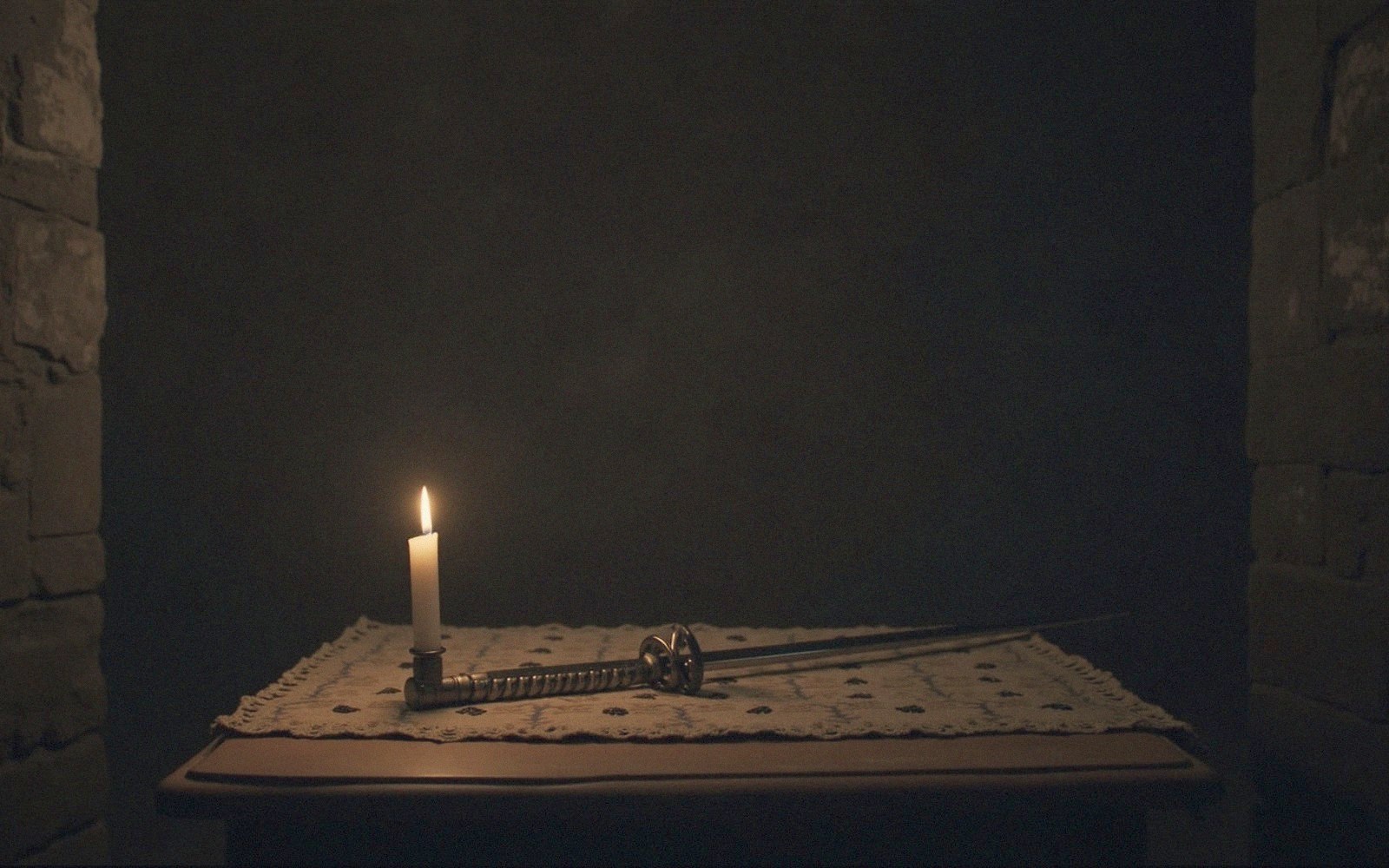
Reception and retrospective position
The 2001 film was not received warmly. Critics at the time found the dramatic scenes underpowered relative to the action, and the pacing in the first half uneven. The gap between the fight sequences and everything connecting them was too wide; the story engine did not run cleanly enough to carry an audience from one set-piece to the next. Those are legitimate observations and they have not dated away. The film's structural problems are real.
What has shifted, over the two decades since, is the way the action sequences are discussed. The ladder fight in particular has been cited by critics and stunt professionals as a genuinely inventive piece of work — a sequence that would look well in any film and that here sits in one that did not quite earn it. That is a strange kind of legacy: to be remembered for a sequence that exceeded its context. But it is a real one.
In the full genealogy of Musketeer films, the 2001 version does not displace Lester. Nothing has. What it does is occupy a position no other version holds: the one that took the fights seriously on their own terms, that brought an outside action tradition into a European historical setting and committed to it without apology. The Fairbanks film owns the athletic spectacle of the silent era; the Lester films own wit and physical intelligence; the Disney version owns a certain uncomplicated pleasure. The Hyams film owns the choreography. That is a narrow ledge, but it is its own.
The crowd is thick. The company is sometimes distinguished. This film is not the best Musketeer picture ever made, and it probably did not intend to be. It intended to show D'Artagnan fighting in ways no cinema had shown him fighting before, and in that specific, bounded ambition, it succeeded. What you make of that depends on what you came for — and for a certain kind of viewer, what this film came for is exactly what they wanted.
| The Three Musketeers (1973) | The Musketeer (2001) | |
|---|---|---|
| Director | Richard Lester | Peter Hyams, also his own cinematographer |
| Fight idiom | Weight, clumsiness, comedy — swords as heavy objects | Hong Kong choreography — the room as an opponent |
| Tone | Satirical, sunlit, ensemble | Dark, wet, built around one man |
| Remembered for | Its ensemble and its jokes | One cellar, several ladders |
- 1921Douglas Fairbanks version establishes swashbuckler template
- 1948MGM/Gene Kelly version; dance-inflected athleticism
- 1973–74Richard Lester's two-film adaptation; critical high-water mark
- 1993Disney version with Sheen/Sutherland/O'Donnell
- 2001Hyams film; Hong Kong choreography applied to Dumas
Who is in this piece
Peter Hyams
director of the 2001 film
also served as cinematographer
Justin Chambers
plays D'Artagnan in the 2001 film
Tim Roth
plays Febre, the Cardinal's swordsman, in the 2001 film
Stephen Rea
plays Cardinal Richelieu, the film's political villain
Catherine Deneuve
plays Anne of Austria
Mena Suvari
plays Francesca