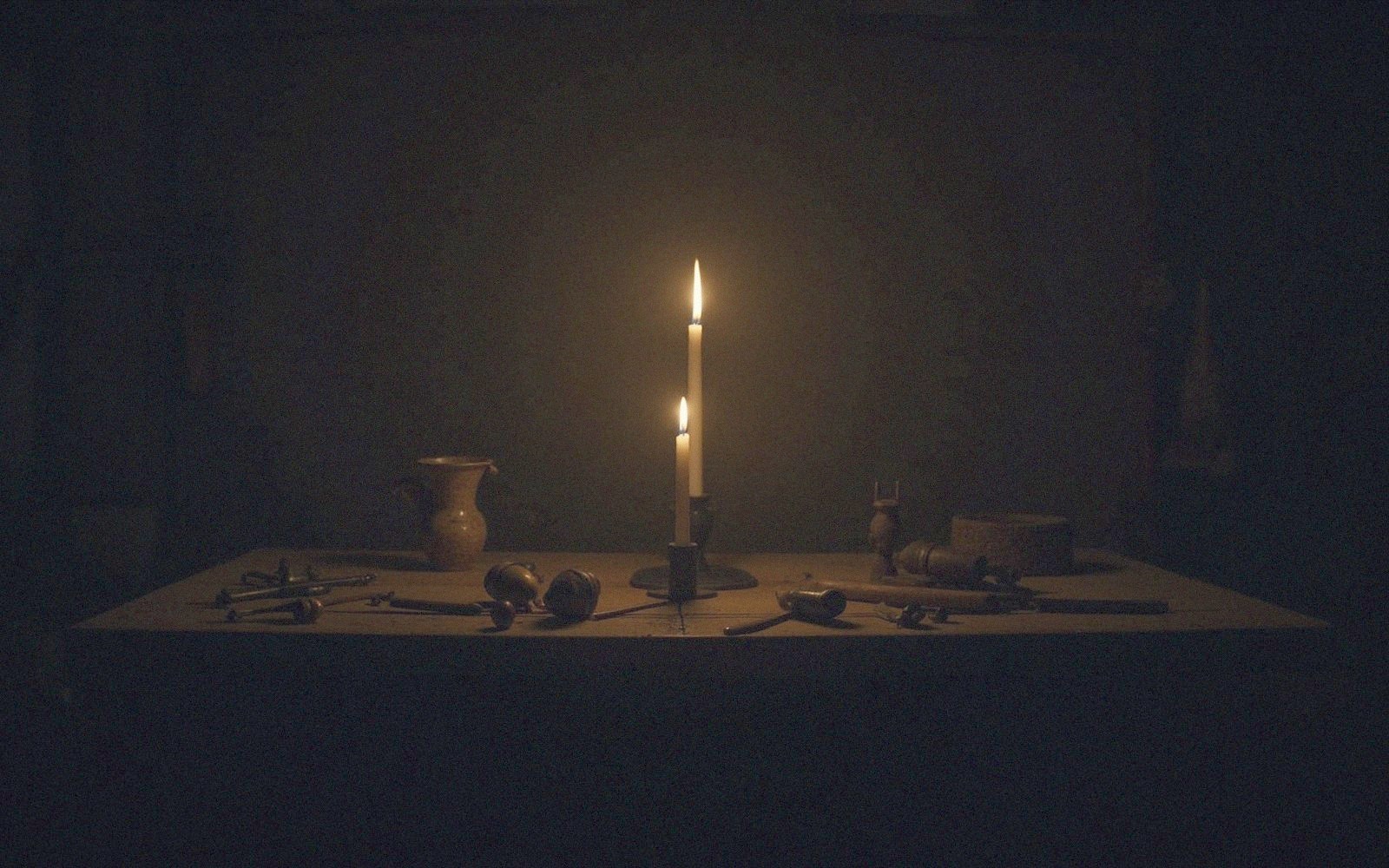
A Production Built in Two Places
Sets, locations and the practical business of making a seventeenth-century action picture.
Shooting Between Germany and Luxembourg
The Musketeer was shot in Europe, predominantly in Germany and Luxembourg, with production making use of the region's castles, period architecture and studio infrastructure. The choice was partly practical — European crews and facilities offered both the physical environments and the cost structures a mid-budget costume picture required — and partly aesthetic. Director Peter Hyams had long preferred to shoot his own films, serving as his own cinematographer, and working in a European base gave him the kind of controlled, contained environment that suits a director-DP who wants full command of the frame at every stage.
Germany's Bavaria Film studios in Munich provided the controlled interior work, stages large enough to dress as palace corridors, taverns and the confined spaces that the film's choreographer, Xin Xin Xiong, would fill with combatants. Bavaria Film is one of Europe's oldest and best-equipped studio complexes, with a history of hosting major international productions, and it gave the production its anchor. Around that anchor, the company moved to practical locations: the castles, courtyards and cobbled exteriors that give the film its period texture. Luxembourg's fortified landscape, with its dense concentration of medieval and early modern architecture, provided backdrops that would have cost far more to construct on a soundstage.
The production was a joint venture between Miramax Films and a collection of European co-producers, which shaped how and where the money was spent. Co-production arrangements of this kind typically tie a portion of spending to the partner countries, directing the shoot toward local crews and locations. For The Musketeer, made on a budget that was substantial but not extravagant by the standards of a Hollywood studio action picture in 2001, that arrangement meant European crafts people and European locations formed the backbone of the physical production.
Stone interiors that could absorb a low-key light without losing the century.
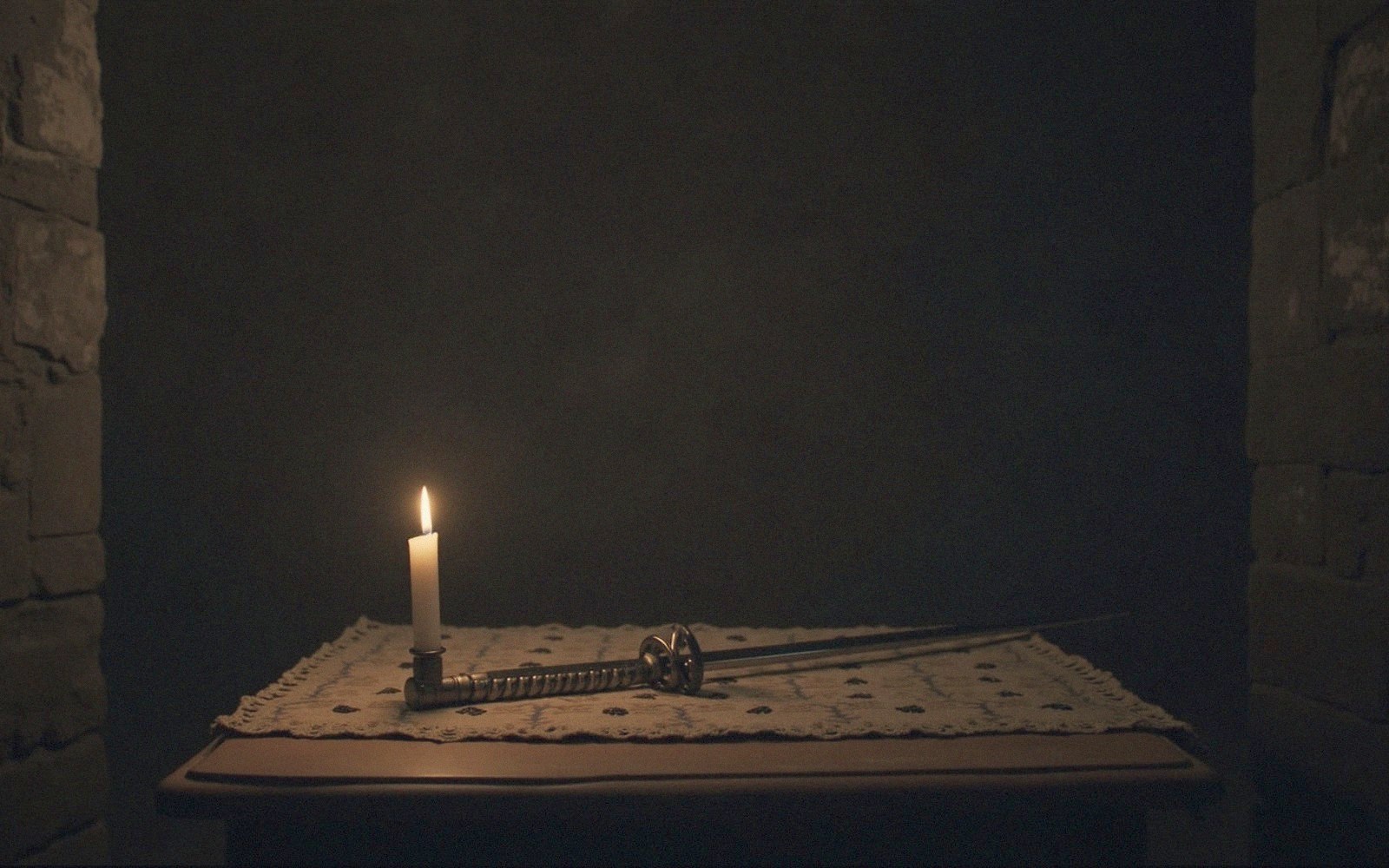
Building a France That Never Quite Existed
The seventeenth-century France the film inhabits is a constructed one — period-adjacent rather than strictly accurate, dressed for atmosphere and action rather than historical record. Production designer Michel Levesque was responsible for shaping that environment, building interiors that mix the grandiose with the functional, spaces that read as real places rather than theatrical backdrops. The look is dark, warm-lit and textured: stone walls, timber, candlelight, narrow passages. It is a France assembled from European materials on a schedule that demanded efficiency.
The film's action sequences placed specific demands on the set-builders. Xin Xin Xiong's choreography, which drew heavily on Hong Kong wire-work principles, required staging areas that could accommodate vertical movement, rigging points and the kind of spatial complexity that conventional Western stunt work does not usually demand. The ladder fight sequence — the film's most discussed set piece — was built on a practical set, a multi-level structure designed specifically for the sequence's vertical logic. That kind of pre-planned construction, where the environment and the choreography develop together rather than separately, is common in Hong Kong action filmmaking and marks one of the ways the production's unusual creative collaboration left a physical trace on the shoot.
Justin Chambers, cast as D'Artagnan in what was then a relatively early point in his career, trained extensively for the physicality the role required. The cast at large — which included Tim Roth, Catherine Deneuve, Mena Suvari and Stephen Rea in major roles — brought a range of experience to a production that asked its principals to work in period costume on practical European locations, often in the wet, cold conditions that shooting in northern Europe entails. Hyams, photographing the film himself, worked in close proximity to his actors throughout, a method that tends to compress the distance between the camera and the performance.
The shoot was neither long nor particularly troubled by the accounts that reached the public record. The film arrived on schedule for a September 2001 release in the United States. What it brought back from Germany and Luxembourg was a picture with a distinct physical character: real stone, real light, real locations pressed into service for a story that asked them to become seventeenth-century France. Whether that worked — whether the assembled parts produced something that felt coherent — is a question the film's reception addressed, not always kindly. But the production itself, the practical act of making the thing, was a professional exercise in European co-production filmmaking, efficiently executed against a clear brief.
Who is in this piece
Peter Hyams
director and cinematographer of the film
Xin Xin Xiong
Hong Kong-based fight choreographer hired for the production
Justin Chambers
lead actor, plays D'Artagnan
Tim Roth
plays Febre, the Cardinal's swordsman
Catherine Deneuve
plays the Queen
Mena Suvari
plays Francesca