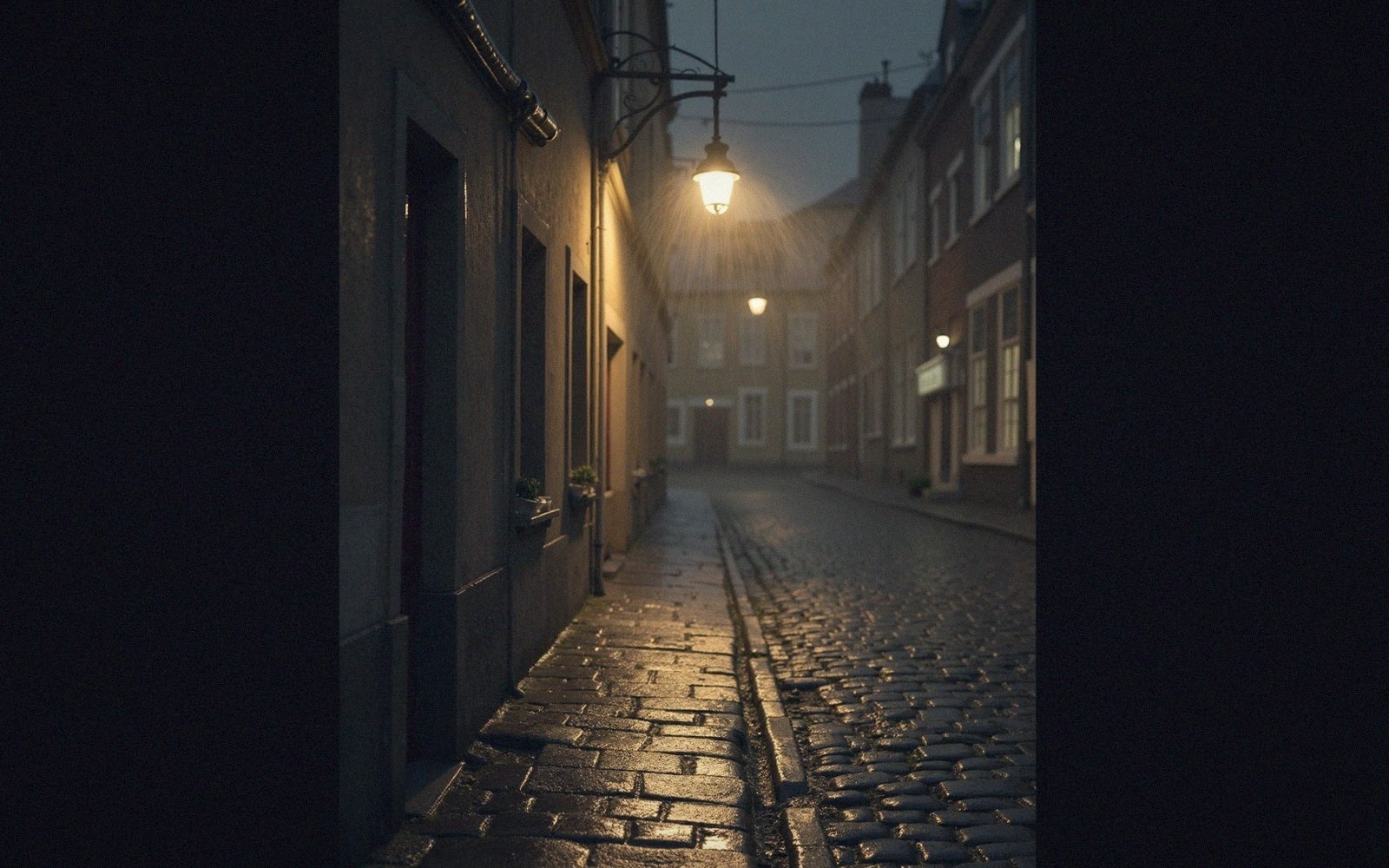
A cinematographer-director's eye turns a seventeenth-century adventure into something cooler and harder than the genre usually allows.
Mud, Not Pageant
Peter Hyams has shot his own films for much of his career, and the habit produces a particular quality of image: functional, exact, unapologetic about darkness. On The Musketeer he brought the same instincts to a period setting that most directors treat as an occasion for warm amber light and sumptuous spectacle. The result is a costume picture that looks, in its bones, like a thriller.
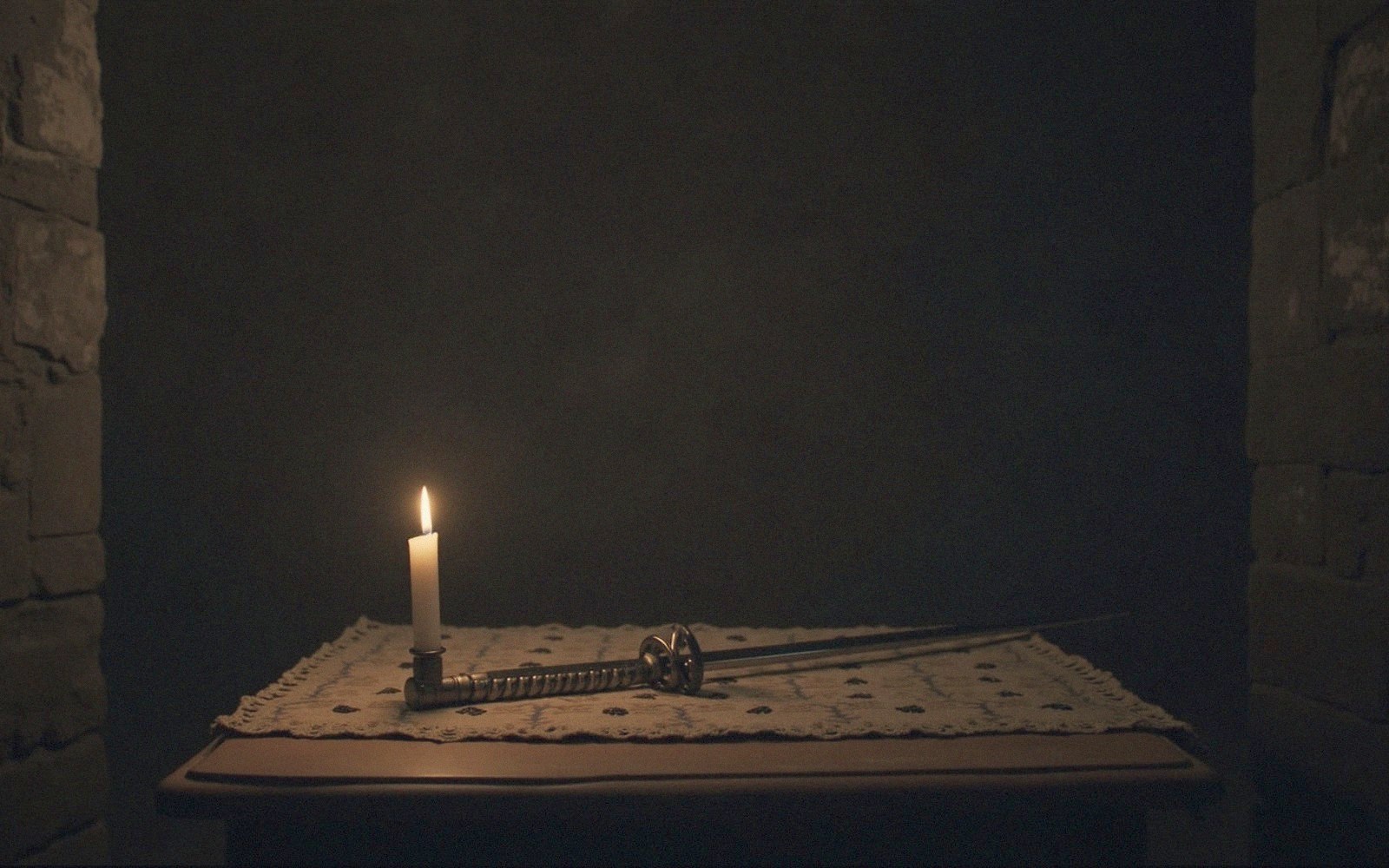
The palette runs toward grey and steel-blue. Candlelight is present — it has to be; the interiors are seventeenth-century France, and the production built substantial practical sets — but Hyams uses it as a point source rather than a wash. Faces emerge from shadow. Backgrounds drop away. The effect is sculptural rather than pretty, and it keeps the film from the illustrated-novel softness that afflicts a lot of literary adaptation.
Rain appears often enough to become a motif. Exteriors feel genuinely cold and overcast, the kind of northern-European light that flattens rather than flatters. Cobblestones are wet. Cloaks hang heavy. The world the film constructs has texture and weight, and that weight suits action — a body that hits the ground ought to land on something solid, and here it does.
The Fight Frame
All of this matters more than it might seem once the swordplay begins. Wide lenses, close to the action and kept low, make the fighters look fast without resorting to undercranking. The ladder fight, the film's most discussed sequence, is shot against a darkened sky; the fighters are lit selectively, almost theatrically, so that the choreography reads at speed without the frame becoming cluttered.
Colour plays a role too. Cardinal Richelieu's men dress in a red that reads almost black in low light — Tim Roth's Febre wears it throughout. Justin Chambers as d'Artagnan tends toward warm browns and undyed linen, which place him against the darker palette without disappearing into it. These choices are not accidental. A cinematographer who is also the director has no gap between intention and execution; what Hyams wanted, Hyams got.
The approach produces a film that does not look expensive in the usual sense. There are no scenes designed primarily to show off production value. What it looks, instead, is considered — every shot chosen for what it tells the action, not for how it fills the frame. In a genre prone to self-congratulation about its own beauty, that restraint is unusual, and worth noticing.
A costume picture lit like a crime film: candle, rain, and almost nothing else.
Who is in this piece
Peter Hyams
director and cinematographer of The Musketeer
shoots his own films
Justin Chambers
plays d'Artagnan, the film's lead
Tim Roth
plays Febre, the principal antagonist